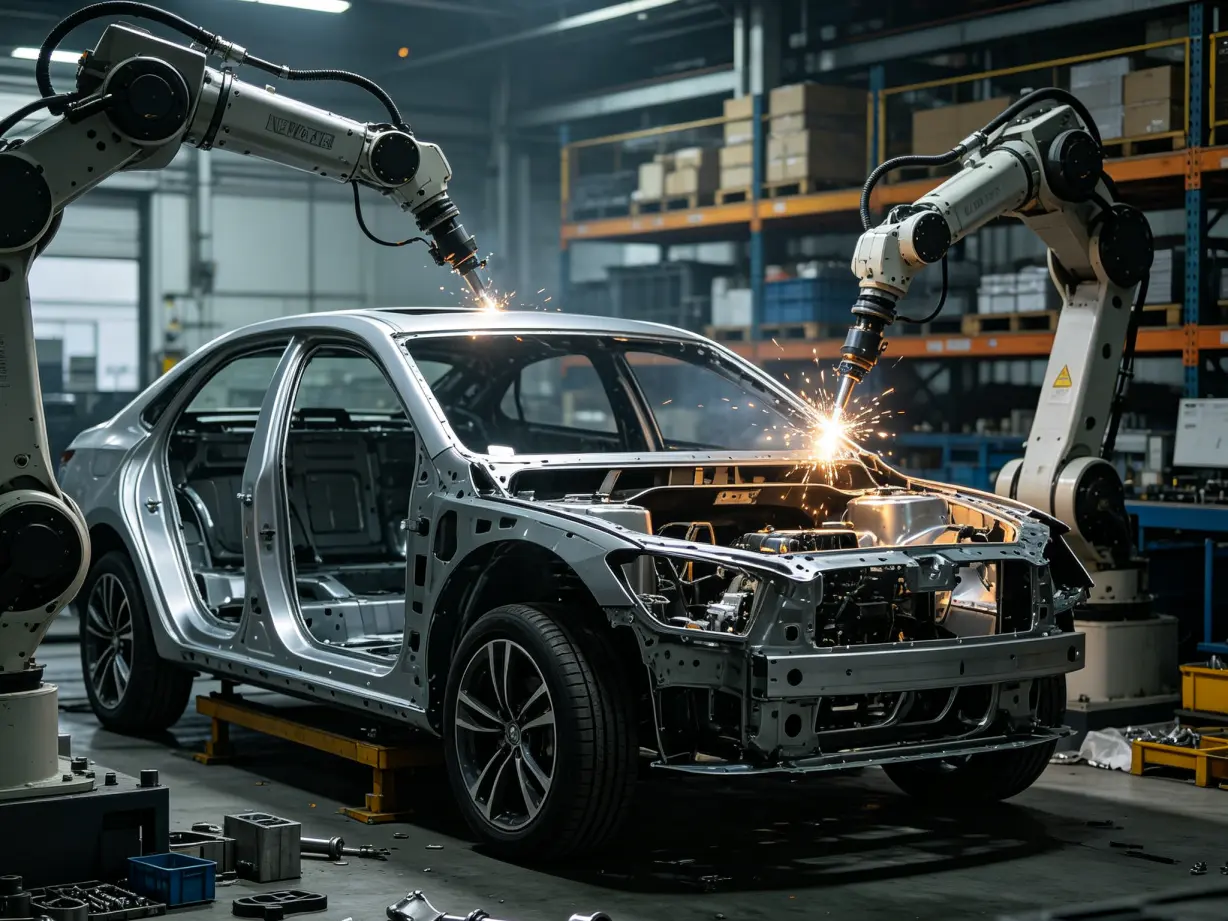
The automotive industry in South Africa is one of the most developed manufacturing sectors on the African continent and plays a significant role in global supply chains. It has evolved into a highly export-oriented production hub supported by several international vehicle manufacturers.
Today, South Africa produces around half a million vehicles annually, with a strong focus on light commercial vehicles, passenger cars, and exports. Major global brands such as Toyota, Volkswagen, Ford, BMW, Mercedes-Benz, and Isuzu operate local assembly plants, making the country an important production base for both domestic sales and international markets, particularly Europe and other African countries.
A key strength of the sector is its well-established industrial ecosystem, including a developed network of automotive suppliers, logistics infrastructure, and experienced manufacturing capabilities. The Port of Durban plays a critical role in enabling large-scale vehicle exports.
Government support through industrial programs such as APDP (Automotive Production and Development Programme) has also helped sustain investment and improve local production capacity, while encouraging higher levels of local component sourcing.
Looking ahead, the industry is gradually transitioning toward electrification and new energy vehicles. Although adoption is still in its early stages compared to global markets, several manufacturers are beginning to introduce EV-related production and investment plans. At the same time, South Africa continues to face challenges such as energy supply constraints, logistics inefficiencies, and increasing global competition.
Overall, the South African automotive industry remains a key manufacturing hub in Africa, with strong export potential and a gradual shift toward more advanced, sustainable vehicle technologies.