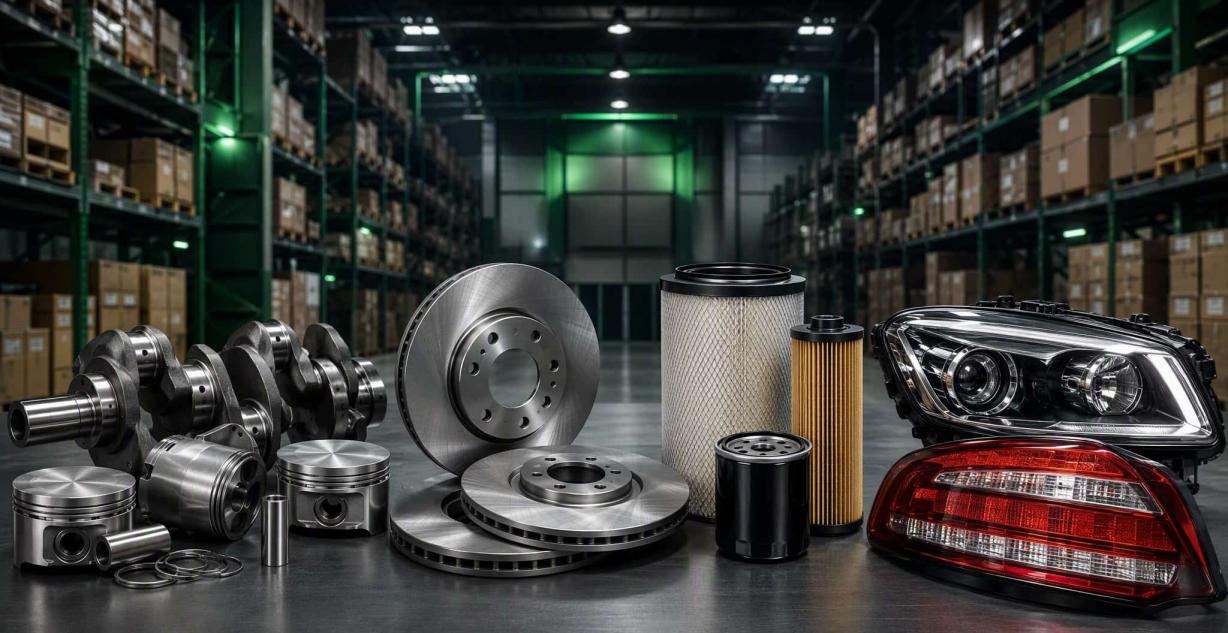
South Africa’s automotive aftermarket is attracting renewed attention as the government seeks to strengthen local manufacturing, create jobs and reduce reliance on imported replacement parts. For international manufacturers, these developments highlight the importance of understanding local demand, building reliable distribution networks and exploring long-term partnerships.
A R107.5 Billion Market for Replacement Parts
South Africa imported approximately R107.5 billion worth of automotive replacement parts in 2025, according to figures presented by the National Association of Automobile Manufacturers of South Africa (naamsa). Meanwhile, the country’s automotive aftermarket generated approximately R933 billion in trade and contributed R202.6 billion to GDP.
The sector supports more than 310,000 jobs across over 23,000 businesses, many of which are small and medium-sized enterprises. These figures demonstrate the aftermarket’s significant role in South Africa’s broader industrial economy.
Local Manufacturing Takes Centre Stage
In October 2026, South Africa’s Department of Trade, Industry and Competition called for greater localisation, investment and skills development across the automotive aftermarket.
The government is reviewing the Automotive Production and Development Programme (APDP2), with discussions highlighting the need to consider the wider automotive value chain, including replacement parts, repairs and maintenance services.
The objective is to expand domestic manufacturing capacity, retain more economic value within South Africa and support employment.
Building Stronger Local Distribution Networks
South Africa’s aftermarket is served by a diverse network of wholesalers, parts retailers, workshops, fleet operators and independent distributors. For overseas manufacturers, establishing relationships with these businesses can help improve market access and create more sustainable sales channels.
Local partners can provide valuable insight into purchasing behaviour, fast-moving product categories, vehicle compatibility and regional demand. They can also help overseas suppliers respond more effectively to customer requirements.